Monday, 24 December 2012

The Casual Vacancy


I promised to write something about JK Rowling's adult effort, so here we go.  

Put simply, I just didn't get it. This book as the archetypal 'Curate's egg', some sections were beautifully while some (the excruciating sex scenes for example) were sub-sixth form twaddle.


The main thing I didn't get though was the actual setup, the machinery that (supposedly) drove the plot. The 'Parish Council' for example seemed to have more in common with a town or borough authority than the purely parochial parish setups in most villages. Even more confusingly the 'local councillor' would have fitted the role of patrician MP equally well, if not better.

Another thing that grated was the underlying suggestion that poor people live in grinding misery alongside their grinding poverty. In my experience, they have as much fun - possibly more - than the perpetually hassled middle class who are the real miseries. To be fair, Rowling doesn't let them have much fun either.

We'll gloss over large parts of the book being set in a secondary school with teenage protagonists. Some of the younger characters rang true and others really didn't.  Looking at the adults, having a grossly fat shopkeeper worked to an extent, but a deerstalker?  Perhaps how peculiar it would look was exactly what she was after?  I just wanted to know whether the flaps were left up or down, something which I believe the narrative didn't relate.

It's a long, long book and it dragged in many places.  The thin plot strands weren't enough to carry this relatively large coterie of characters really.  And what characters they were, the self-obsessed wife-beating criminal from the print works. The muesli-knitting sandal-wearing terrible single parent from That London.  The drug-addled prostitute from the estate who for some reason has a mother who didn't go 'bad' and is fairly saintly until she is killed by the Indian doctor.  They came across as mere ciphers or loose cliches rather than true 'characters'. Oh, and the daughter of the Indian doctor is an unhappy teenager who self-harms, what were the chances of that?

I have read many, many worse books than this and is a testament to there being something of interest there that I finished it.  On many occasions I have given up a short way into this sort of thing.  That's why it is interesting to look at why this is such a dud (which undoubtedly it is).  A first question is how to categorise the book.  It flits from genre to genre lightly, never really making its mark anywhere.  This is no cosy 'Aga saga', it certainly isn't 'chick-lit'.  The racier content shows that it is definitely aimed at an adult audience and it times it seems to flirt close to being polemic, prose flecked with rage with regard to rural drug treatment centres and poverty.

Parts of the plot held up surprisingly well, particularly the reemergence of the stolen computer at crucial point late on.  Conversely the sections on the various people 'hacking' the Parish Council messageboard felt like they were written by someone that could barely write an email, they clunked enormously.


There also seems to be an attempt to hark back to earlier periods of fiction.  The works of Jane Austen and Elizabeth Gaskell came to mind at moments and the myriad detail of council business give rise to thoughts of the ecclesiastical machinations of Trollope.  The overwritten chapters and overall bulk of the thing reminded me of why sometimes I can't bear some of the weightier tomes from Charles Dickens.

So, all things considered, how could that have been a better read?  A simple way would have been to realise that there is humour in even the bleakest of situations and that it doesn't half help a plot move along.  Alternatively, if you are going to create a cast of grotesques, then forget humour and go for all out scabrous comedy.  About half way through I found myself wishing Tom Sharpe had been let loose on this crowd.  That would have quite a read.


The casual vacancy? The missed opportunity more like.


Friday, 12 October 2012

The Casual Vacancy - JK Rowling


I've read it, am considering my response and will write something when all the hoo-hah has subsided.  As a starting point though, I must say that I think the cover is a splendid bit of work.

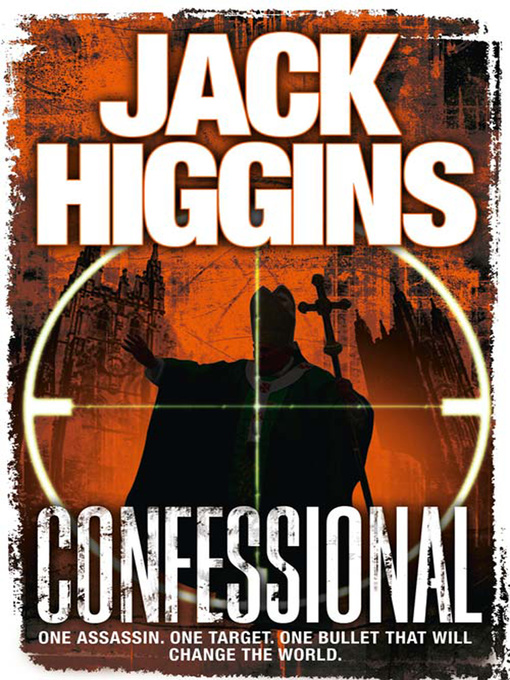
Jack Higgins - Confessional & Touch The Devil

Confessional (eBook): Liam Devlin Series, Book 3
Touch the Devil (eBook): Liam Devlin Series, Book 2

I know that you are supposed to name-check someone like Proust or even Murukami when you are asked who your favourite author is, I have to admit I find all that a little pretentious.  One of the marvelous things about books is the variety on offer and that there is always something to fit any occasion.  So, I have to admit that some days when asked that question the answer might be, for example, Dick Francis. This leads me neatly to Jack Higgins, who I would say was far from fashionable these days.


Considering my favourite book, well, that chops and changes frequently too, but on many days my answer might be 'The Eagle Has Landed'.  I love the plotting, the pacing and the characterisation.  It has that 'Day of the Jackal' quality about it too; you know they aren't going to kill Churchill, we're not in 'Fatherland' territory, but the buildup is spectacular. I've read and appreciated (but wouldn't rave about) the sequel 'The Eagle Has Flown' and hadn't realised that Higgins had continued with Liam Devlin in a couple of novels set in the 80s.

I always believe in considering a book for what it is, rather than what it isn't.  These are a couple of page-turner thrillers, contemporary to the time they were published.  Compared to the vast tomes we are saddled with today, these are almost short stories and I whipped through them in a matter of days.

Liam Devlin has grown old and is an academic in Dublin.  So far, so unlikely, but that was Devlin's character for you.  'Touch The Devil' has shades of 'Papillon' and 'The Count of Monte Cristo', but begins during the Vietnam War, so lots of bases covered here.  'Confessional' hangs around two events that I had forgotten were so closely linked, the Falklands War and the Papal visit to the UK and Ireland.

In these very different times, it is easy to forget the shadow that the Cold War cast over popular fiction.  We are in completely different territory to Le Carre here though. While sometimes the pace in the Smiley trilogy is glacial (and that is no bad thing), here the action zings along at a cracking pace.  In 'Confession', there is even a brief trip to Jersey, almost like a forgotten episode of Bergerac.


One thing that Higgins does to add authenticity to his work is to bring real people in, so it is a shock to find Martin McGuinness (no 'Chuckle Brother' then) in a major supporting role.  There are some moments of genuine nastiness in both books, but they seem nowhere near as gratuitous as in some more recent examples of this genre.

A couple of easy reads then, but ones that remind us of a very different world that was not so long ago.  To identify a dangerous criminal on the run at one stage, various people are brandishing copies of a newspaper. Mobile phones are nowhere to be seen and the internet would have seemed like a far-fetched fantasy.


Jack Higgins is still going strong, he has a new book out this month.  I might buy it.  Now where did I put those Sid Halley books again . . ?

Patrick Hennessey - The Junior Officers' Reading Club


I remember reading about this when it was first published and being intrigued, but not quite intrigued enough to go out and buy it.  I subsequently happened upon a copy though and - not least I have to admit because there was a quote from William Boyd on the front cover - couldn't resist.

From the outset I have to say that 'war books' are not really a genre that does much for me.  I'm as likely to read 'Bravo Two Zero' at any time in the near future as I am 'Black Hawk Down'.  To clarify, that is never, even if I was locked in a cell with no possibility of release and they were the only reading matter available, that is how vehemently I despise gung-ho military potboilers.

I was surprised by how quickly I was gripped by this then, I was even more surprised at how well written it was, not least given the relative youth of the author.  It was much, much better than it had any right to be and is a testament to the importance that email has today in replacing the hastily penned missive, even at the heart of the battlefield.

What Hennessey has done so expertly is to distill some of the reasons that young men still want to join the armed forces by explaining the excitement, the camaraderie and the epic highs that can be achieved.  However, he juxtaposes this with a very knowing analysis of the futility, stupidity and banality of armed conflict.  

For me, what this book did was something that a thousand newspaper and television reports have not done. I felt that I had some understanding of the reality of life as a front line combatant in Iraq and Afghanistan.  I knew that the idea behind the western forces in Afghanistan was to 'support' the ANA and attempt to train them to their own exacting standards.  This book chronicles the huge difference between these two fighting forces.

Hennessey doesn't over analyse, he puts out the facts as they are, or as he believes them to be and allows us to come to our own conclusions.  You can feel that these experiences have made him a different person. Whether being placed in such extreme conditions makes you 'stronger' as traditional wisdom has it, or has a totally different effect on your psychology, it is difficult to tell.  

I felt that the light touch that the book has, along with the literary and gaming activities that connected grim conditions in Afghanistan, took you on a fascinating journey.  This was no heavy-handed Tolkienesque 'there and back again' saga though, it was about very real people in.

This is a great piece of work, and I hope that Hennessey doesn't give up on literary endeavours in whatever future path him on. Highly recommended.

Wednesday, 12 September 2012

Peter James - Dead Man's Grip


I've been caught out by Peter James and his protagonist Roy Grace not once, but twice before.  The first two books in the series intrigued me and I read them, then I realised I'd been had.  Police procedurals can be good fun, but only (and this is a vital point) if you believe in the central character.  

This was the problem I had, nothing in the character of 'Roy Grace' from his name to the way he behaved to the products he owned rang true with me, which was why I gave up on the series.  The books were extremely well written and decently plotted, but there was just something about the main man that really didn't gel.  So, that was that, millions of other books out there, no need to return to something that wasn't doing it for me.

So, why on earth have I returned to Brighton (and Hove) and the world of Roy Grace?  Anyone with an eye on the book business will have an inkling.  It's all to do with price points, Amazon are offering a very few new releases at the stunning price of twenty pence. I struggle to think what else you can actually buy for that amount - probably what I think of as a penny chew and then settle on a copy of the 'i' newspaper.

That's what the book is up against then, a read today, throw away tomorrow newspaper that is pitching itself slightly above 'Metro'.  How did it do?

The surprising answer is - actually reasonably well.  I still find Grace a cardboard cutout character carted unconvincingly into circumstances.  He appears to have got himself a 'stunnah' for a girlfriend, so far so irritating and the dangling sub-plot of a missing ex-wife is still being milked to tedious levels.

My cewdulity dropped even lower when we left Brighton for a load of sub-Sopranos Noo Joisey gangster nonsense, with more terrible characterisation. But there is a curious quality behind all this, if Grace (and a few of the other characters) could be kept away from the action, there is an excellent thriller here.  

The action kept coming, the violent scenes were nasty enough to keep you reading and the pace made you want to find out what happened at the end.  Fundamentally though, some frankly unlikely characters and a propensity to wear its research very heavily let it down.  That said, it has to be the best lock-based 'tec outing since Vic Warshawski tried to find out what happened to cousin Boom-Boom.

So much for the story, how about the marketing channel?  They got me to buy, and read, a  book I would have otherwise ignored and twenty of my hard earned pence for it.  So, that is success? Well, up to a point.  

Would I buy another of these?  That's an easy one to answer, at twenty or fewer pence, I'm probably there.  If it was a great deal more, probably not.  The cheap price simply confirmed my prejudices against the main character and my feeling that the author is a better writer than this series is allowing him to be.


Monday, 10 September 2012

Richard Saunders - Taipei Escapes 1&2


Finally I find time to write about a couple of books that actually feature Keelung and her environs. These two sizeable tomes are invaluable for the long-term Northern Taiwan resident keen to eschew the tourist traps and the department stores and to actually experience what can be a truly stunning place.

Taiwan is not particularly well-served by the travel literature available in English.  Official government publications are well meaning efforts that are usually a straight translation of their Chinese counterparts. This doesn't mean that they automatically become of use to foreigners seeking  good day out, Taiwanese and western concepts of what is worth seeing can be described as varying drastically.

The 'usual suspects' of the travel world are here of course. Lonely Planet have offered an English guide to Taiwan since 1987 with Rough Guides joining the fray a little under twenty years later.  For the less energetic sightseer Insight and broadcasting and publishing behemoth National Geographic offer a much glossier alternative.  Most recently Michelin have produced an edition of their iconic 'Green Guide' providing a slightly different take on tourism again.

These books are all fine in their own way and are aimed squarely at two markets, the intrepid western backpacker wanting to experience something culturally different and the richer, older western tourist wanting exotic oriental experiences without the discomfort of backpacking.  Both these activities have their merits and  these books have their place too.  What they don't cater for is those of us who may be here for more than a week or so and want to see more of the countryside than 99% of locals.

So, into this breech has stepped Richard Saunders with these two splendid volumes (actually fully updated versions of earlier similar books).  Both provide a selection of ten one-day trips to tourist spots followed by an excellent selection of routes which stretch the whole gamut of activity from 'walk' to 'hike'.  

What sets these works apart from anything else available (and there is very, very little) is the attention to detail.  Everything from pet-friendliness to location of bathrooms has been investigated in detail.  Saunders is also meticulous in providing the Chinese for anything of importance, something that locally translated materials always forget (they just exchange Chinese for English).  He also provides hand drawn sketch maps of the routes and some mouthwatering photos to whet your appetite.

It seems almost churlish to be in any way critical about such a wonderful project which is obviously done out of love for the environment of Northern Taiwan and a desire to share it with others.  Richard may possibly live in a fortified Tianmu condominium and spend his time counting the billions he has made from these books, but I think that is somewhat unlikely!  

So many thanks for the time and effort put in, but here are a couple of suggestions for future versions.  Once you have packed your rucksack with the recommended supplies, these books are actually relatively heavy.  A simple, but rather environmentally unfriendly, solution has been to simply photocopy the relevant pages.

How about, given the amount of hardware that people carry around these days, offering both in an e-book format? Being able to carry both books around in your phone or tablet would be incredibly convenient.

Finally, just because I want the world on a stick, I keep looking at these books and thinking how amazing it would be if the maps and text could meld together on the page in the way that Alfred Wainwright did.  The old curmudgeon produced fabulous hiking guides to the hills of Cumberland and Westmorland that look like this. 


A page from 'The Central Fells'


Imagine that for walks around Jiufen and Jinguashi or Fulong, it would be quite spectacular and far nicer than anything available in Chinese.  The ultimate accolade I presume would be for a Chinese publisher to produce a translated version. I hope that happens one day.

To purchase these estimable books: In Taiwan, they are on the shelves at Eslite (various branches) and Page One (Taipei 101).  Also online from Eslite http://www.eslite.com/product.aspx?pgid=1002123202052489

If you can't find them there, contact the publisher http://www.communitycenter.org.tw/publications

Also highly recommended is Richard's guide to Yangmingshan, but that is, as they say, another story.

Alan Garner - The Weirdstone of Brisingamen


I thought it was time to revisit this ahead of the imminent arrival of 'Boneland', a third 'Tale of Alderley' a mere 42 years after the first.

My first problem was nothing to do with Garner at all, it was the dreadful edition of the book that I have.  For me, the image above 'is' the cover to this book, not this monstrosity;


I have, it appears, a US young adult edition that commits a heinous sin in the blurb on the back cover. It describes the action as taking place in 'the mountains of Wales', because some good citizen of the States has picked up that it is riffing on Celtic myth, put two and two together and got it very wrong indeed.  Alderley Edge, Mobberley, Macclesfield and the like are all in Cheshire, a very great distance from the Welsh border.

On to the book itself, I raced through it and it was like meeting an old friend again.  When Cadellin exhorts the 'Maggot breed of Ymir' to scarper, I found myself wondering why this never made it on to the big (or even small) screen, it's gripping stuff.

The early sequences with Selina Place are unsettling and the general sense of foreboding is palpable.  I enjoyed the scenes in the mines with the Svarts but thought they went on a bit too long and lost the tension a little.

The second half of the book is essentially the 'quest', when they travel from A to B with X to give it to Y with many exciting events on the way.  So far, so Hobbit or Lord of the Rings, but the difference here is that the fantastical events are grounded in a very real bit of British countryside, not a weird otherworldly realm.

Another thing that always puzzled me was why Gowther went along with them.  The usual deal for children's fiction is that their 'appropriate adults' are in the dark about what is going on, whereas he literally goes for the journey.

The various episodes of peril are well done and who could fail to appreciate a character called 'Angharad Goldenhand'?  We go along for a bumpy ride and then, all of a sudden, it's all over.  The ending comes as bit of a jolt and we are reminded that this is a very slim volume for those brought up in the Harry Potter generation.

Overall, is it a classic of its genre? Yes.  Is it well-written? Up to a point.  Some of Garner's other work I would rate more highly - particularly 'The Owl Service', but this book is far better than the second volume 'The Moon of Gomrath'.

I look forward to reading 'Boneland', which much surely be the last Alderley Tale that he will write.  I'm still hoping for that film adaptation though; perhaps 'Weirdstone: Closer to The Edge' would appeal to the younger cinema-goer today?