Showing posts with label Cold War. Show all posts

Thursday, 23 May 2013

The Sandbaggers

A whole year before Tinker, Tailor, Soldier, Spy hit the screens Yorkshire Television gave us this gem.


Starring Roy Marsden who would later find fame as ITV's face of the cerebral sleuth Adam Dalgliesh, this was seven hours of raw in-your-face cold war action.  As far as the plots go it is pretty run of the mill stuff, lots of talk about double-dealing by the KGB and snarls of  'this could ruin the special relationship!'.  In that respect, TTSS beats it hands down.  To be fair though the BBC had excellent source material in the original novel and, one would presume, a significantly larger budget.

So,  thirty five years on, was it worth revisiting the world of The Sandbaggers?  On balance I think the answer is yes.  I have gone back to some series of this vintage and barely made it through the first episode.  Here, however, we have characters that although dated and somewhat caricatured are still interesting.  After a while you start to care about Neil Burnside (Marsden) and the way he leads his team of spooks, the titular 'Sandbaggers'.

That word 'spooks' is an interesting one. Watching this brought to mind very much the relatively recent series of that name,  I think they are closer relations than TTSS. This is darker than some of the other drama of the period - take Bergerac for example which came along a few years later.

Some of the production values are frankly shocking to view today, not least because at the time there would never have been any thought of it being watched on a vast widescreen television.  The cuts between location and studio are clunky but do not detract from the enjoyment.

Where The Sandbaggers starts to get interesting is in its ambition.  I have already mentioned that they budget seems to have been limited and that it was made by Yorkshire Television.  Neither of these things stopped the creation of an ambitiously international show.  The first series features action in London, Vienna, the Kola Peninsula, Istanbul, Gibraltar, Cyprus among other exotic spots.  It seems pretty likely that the London scenes were filmed there, but for the rest they simply used what they had around them (and a little stock footage).  

The relatively eagle-eyed will be able to spot that Yorkshire in general and Leeds in particular were utilised for all the location work.  A particularly quaint example comes as our sandbagger is chasing down a terrorist in Gibraltar with an RPG trained on a vital flight out of the airport. We cut between shots of the fiend holding his weapon and an obvious stock shot of a plane taxiing and then taking off. Panning back to what looks suspiciously like a quarry in the Dales, a horde of policeman dressed in outcasts from an amateur production of the Pirates of Penzance appear to apprehend the villain just as he was about to fire.  The stock-shot flight then jets off into the sunshine.


Meetings with a representative of 'the cousins' take place in a park.  That would usually be St James's Park in London, but this one is suspiciously hilly, could it perhaps be Roundhay instead?  Sometimes they haven't even made an effort. 'Limassol' was clearly Emmerdale with some cardboard numberplates on vaguely foreign looking cars. 

Yorkshire have form for this in some truly dire 'comedies', cansider this;


and


The highlight was the choice of location for 'East Berlin' in the final episode of the series though.  I won't reveal it here, but will delight anyone who lived in Leeds in the seventies or the preceding few decades.

Even without the jolt of recognition from some of the locations, this would still have been a worthwhile watch.  I have series two and three (there were no more owing to the unfortunate demise of the writer and creator) and will be watching them even more carefully.


Monday, 24 December 2012

Winter of the World - Ken Follett


I've read for more books by Ken Follett than I should really admit to.  The phrase 'guilty pleasure' is thrown around too much and it isn't quite the reason I read them.  The main reason is that sometimes you fancy reading something that will envelop and involve you without challenging you too much.  That, in essence, is what the 'bestseller' or 'blockbuster' novel is about.  Follett produces great doorsteps of novels encompassing a vast legion of characters.  He doesn't always pull it off, but it's a safe bet that he will provide a more satisfactory read than some American airport 'author' who write by the yard.

I read the first of this trilogy 'Fall of Giants' when it came out and thought it definitely fitted into the list of better-class Follett.  It zipped along for its size and although the research into the First World War felt a little shoehorned in, it was a decent read.

Here, we are on shakier ground.  The biggest problem is, of course, the setting. There are so many good,bad or indifferent works of fiction about the Second World War that any new one is almost setting itself up to fail.   Perhaps the sections of the book that work best are the sequences set during the Spanish Civil War and immediately prior to the Japanese attack.

And so, we have with typical Follett panache a palette of characters so vast that recourse to the handy dramatis personnae at the beginning is advised.  People are born, get married and separate, skullduggery is around the corner on every page. Death abounds (as it surely must given the times) and politics, race and religion should meld together with these real events to create a heady stew that excites and enthralls as it entertains.

It should, but somehow doesn't. The young son of the feisty protagonist of the previous book is nowhere near as interesting as his mother, despite being given some of the key experiences. A huge problem with a book like this set in times that we are over familiar with from a variety of media is that we all know that story.  When the action moves to Pearl Harbor, we know what is going to happen.  Once a sequence begins about creating a megabomb (curiously referred to as 'nuclear' rather than 'atomic' which would have been the current terminology?), we know what that is leading to. 

Therefore, the skill in this kind of work is to seamlessly mix the fictional characters into the real events to give them a more raw and emotional impact.  Ken Follett writes well and has managed this with more distant events, with 'Pillars of the Earth' for example.  I don't think this quite held my attention through my interest in the characters in the way it should, which was disappointing.

Back at the start of his career, Follett came up with a much shorter, nastier and better book about the Second World War, 'The Key to Rebecca',  I recommend reading that instead. I will be back for the third installment of this trilogy, but for the reasons mentioned at the beginning of this review rather than any real expectation to be enthralled.

Friday, 12 October 2012

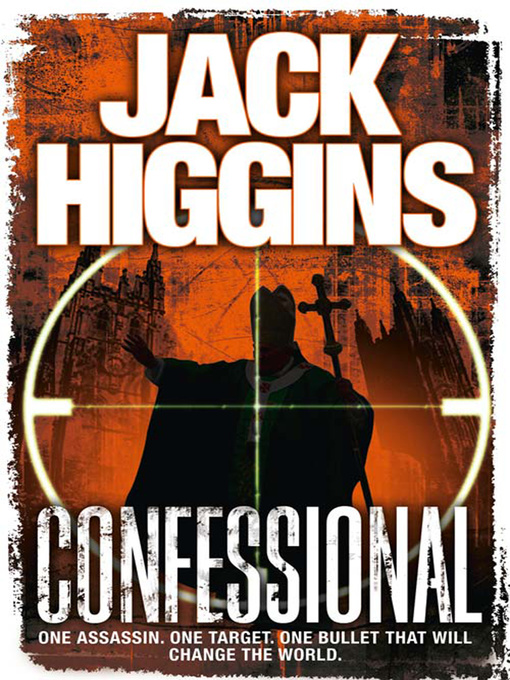
Jack Higgins - Confessional & Touch The Devil

Confessional (eBook): Liam Devlin Series, Book 3
Touch the Devil (eBook): Liam Devlin Series, Book 2

I know that you are supposed to name-check someone like Proust or even Murukami when you are asked who your favourite author is, I have to admit I find all that a little pretentious.  One of the marvelous things about books is the variety on offer and that there is always something to fit any occasion.  So, I have to admit that some days when asked that question the answer might be, for example, Dick Francis. This leads me neatly to Jack Higgins, who I would say was far from fashionable these days.


Considering my favourite book, well, that chops and changes frequently too, but on many days my answer might be 'The Eagle Has Landed'.  I love the plotting, the pacing and the characterisation.  It has that 'Day of the Jackal' quality about it too; you know they aren't going to kill Churchill, we're not in 'Fatherland' territory, but the buildup is spectacular. I've read and appreciated (but wouldn't rave about) the sequel 'The Eagle Has Flown' and hadn't realised that Higgins had continued with Liam Devlin in a couple of novels set in the 80s.

I always believe in considering a book for what it is, rather than what it isn't.  These are a couple of page-turner thrillers, contemporary to the time they were published.  Compared to the vast tomes we are saddled with today, these are almost short stories and I whipped through them in a matter of days.

Liam Devlin has grown old and is an academic in Dublin.  So far, so unlikely, but that was Devlin's character for you.  'Touch The Devil' has shades of 'Papillon' and 'The Count of Monte Cristo', but begins during the Vietnam War, so lots of bases covered here.  'Confessional' hangs around two events that I had forgotten were so closely linked, the Falklands War and the Papal visit to the UK and Ireland.

In these very different times, it is easy to forget the shadow that the Cold War cast over popular fiction.  We are in completely different territory to Le Carre here though. While sometimes the pace in the Smiley trilogy is glacial (and that is no bad thing), here the action zings along at a cracking pace.  In 'Confession', there is even a brief trip to Jersey, almost like a forgotten episode of Bergerac.


One thing that Higgins does to add authenticity to his work is to bring real people in, so it is a shock to find Martin McGuinness (no 'Chuckle Brother' then) in a major supporting role.  There are some moments of genuine nastiness in both books, but they seem nowhere near as gratuitous as in some more recent examples of this genre.

A couple of easy reads then, but ones that remind us of a very different world that was not so long ago.  To identify a dangerous criminal on the run at one stage, various people are brandishing copies of a newspaper. Mobile phones are nowhere to be seen and the internet would have seemed like a far-fetched fantasy.


Jack Higgins is still going strong, he has a new book out this month.  I might buy it.  Now where did I put those Sid Halley books again . . ?